
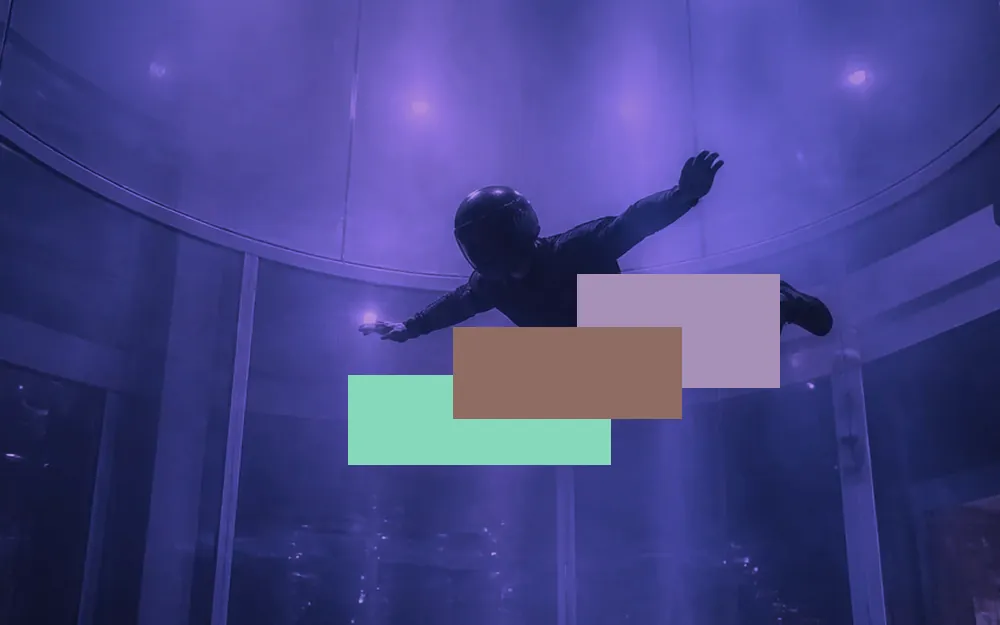
Indoor skydiving—also called tunnel flight or bodyflight—means floating in a column of high-speed air. You wear a suit and helmet, an instructor keeps you honest, and your body shape decides whether you stay put, slide or spin.
Where the “flight” comes from
A vertical wind tunnel pushes air up through a flight chamber. Get your surface area and angle roughly right and you stop falling through it. Get them wrong and you slide toward a wall or drop toward the net. That’s the whole game, dressed up in a loud room.
Because the air recirculates, you can take several short flights in one visit. Outdoor skydiving gives you one freefall per jump. The tunnel gives you takes—and takes are how beginners actually improve.
The tunnel didn’t invent a new sport. It moved freefall practice indoors.
What people usually book
Most public tunnels sell time in bundles. First-timer packages lean on briefing plus instructor-assisted belly flights. Open time is for people who already know how to stay stable. Coaching blocks are for someone chasing a specific skill instead of another photo.
- First-flight packages: gear, class, short assisted flights.
- Tunnel time: minutes for returning flyers.
- Coaching: planned drills, clearer goals, often video.
When a session is actually useful
A great float and a useful session aren’t the same purchase. Useful looks quieter: one or two cues, a chance to try them again, an instructor who talks about hips instead of only cheering. Ask how flight time is counted. Ask whether you’ll share the chamber with advanced traffic. Ask if anyone reviews video with you afterward.
For a lot of people, the best first visit is short and calm. Buy more time after you know what you felt—not because the front desk is good at upsells.
Safety is a briefing, not a slogan
Tunnels are engineered spaces with nets, airflow limits and instructor protocols. You still have a job: listen, use the signals they teach, ditch loose jewellery, and be honest on the medical form. Their house rules beat anything on this website. More on that in safety basics.
Picking a place to fly
- Do you want a thrill, a gentle intro or real practice?
- Is it a tourist corridor tunnel or a training-oriented centre?
- Are the minutes and coaching model explained in plain language?
- Have you read their current age, weight and medical guidance?
We go deeper in how to choose a tunnel.
Common questions
Is this the same as skydiving?
No. Same family of bodyflight skills; different day. No aircraft, no canopy. See tunnel vs outdoor skydiving.
How long will I be in the air?
Depends on the package. Many first visits are several short rotations, not one long float. Ask what the advertised minutes include.
Do I need experience?
Not for standard first-flight products. Instructors expect beginners.
What about the old CityWalk Hollywood tunnel?
It’s closed. Details on the status page.