
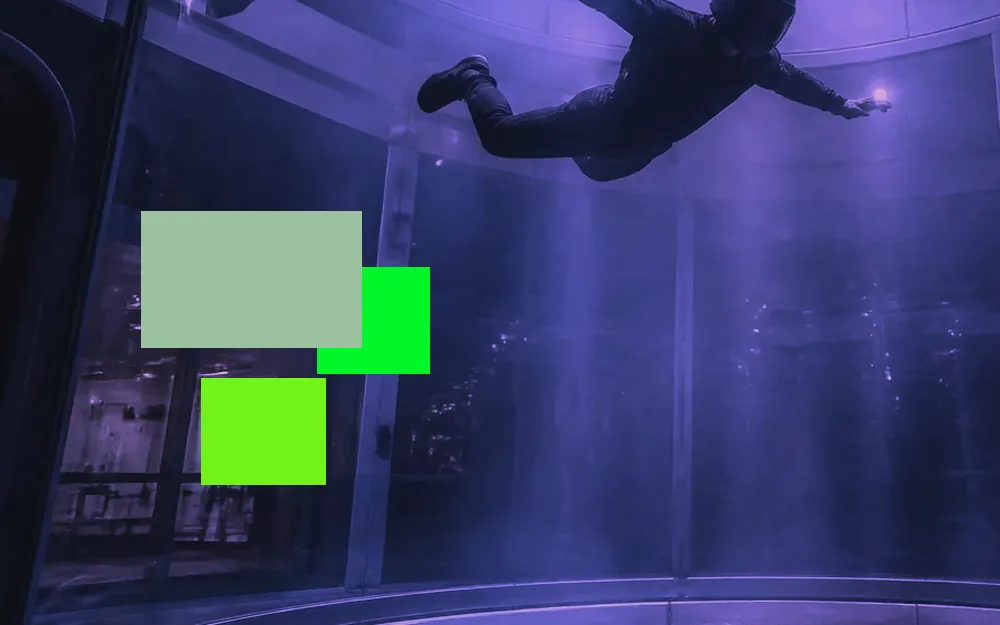
Almost everyone begins on their belly. Hold the centre of the chamber without constant rescue, then add turns and movement. Skip that base and fancy poses are just expensive wobbling.
What actually moves you
Small changes matter. Legs and hips often drive more than people expect; arms fine-tune. Looking down rounds your back and you sink. Lifting the chest helps you climb. Tension is the quiet saboteur—rigid muscles fight the air instead of reading it.
- Stability: stay centred without thrashing.
- Turns: start them on purpose, stop them cleanly.
- Forward / back: move, then kill the drift.
- Altitude feel: notice when you rise or drop relative to the instructor.
How coaches talk when it’s loud
Speech doesn’t travel well in the chamber, so you’ll see short signals: legs out, legs in, relax, look up, stop. Learn that facility’s set in the briefing. Don’t import gestures from a random video filmed somewhere else.
Pick one clear cue, fly a rep, then reset—that’s how seconds turn into training.
How people usually progress
After solid belly control come movement patterns, docking skills, sit-fly and other orientations—depending on coaching plans and house rules. Progression isn’t a race through poses for social media. It’s expanding the set of shapes you can enter and leave without losing the plot.
Video helps. So does asking for a single focus each round. Buy time with a goal attached.